


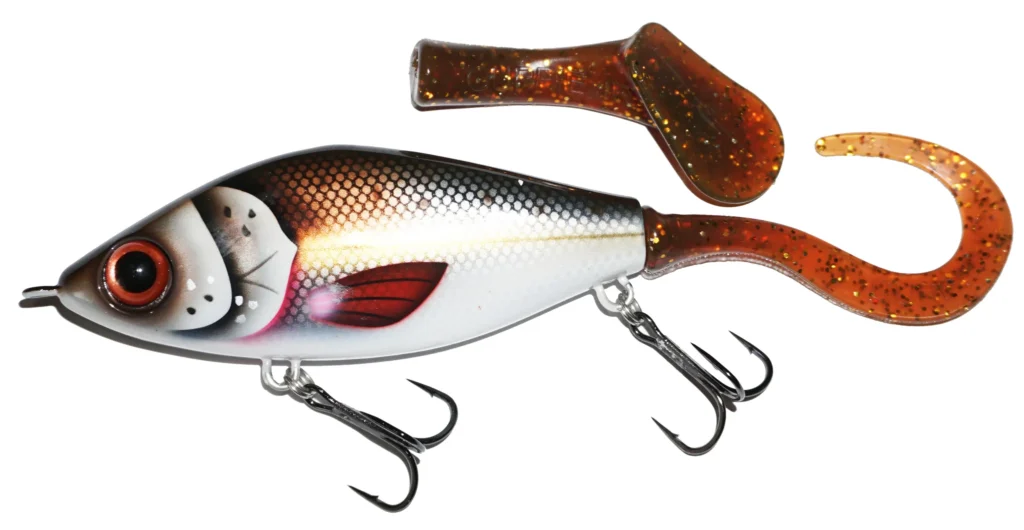
Work the Strike Pro Guppie the Right Way
The Strike Pro Guppie is the sort of lure that exposes rushed fishing. If you throw it out and wind it back like a standard hardbait, you’ll often get follows and bumps, then nothing. However, if you fish it properly, it earns its keep fast.
If you’re fishing in Ireland, this lure fits your reality because there’s no closed season for pike fishing, so you can target pike all year. That means you can practise the Guppie’s cadence in January, not just when you feel “in season”.
You want this lure to land you wins. Let’s look at exactly how to make it do that.
What is the Strike Pro Guppie?
A glide bait is a hard lure that slides side-to-side instead of swimming straight. You pull it, it kicks out. Then you pause, and it hangs there looking vulnerable. Do that again and it repeats the same “escape, stall, escape” story. That side-to-side slide is the whole point, because it looks like a baitfish that can’t keep its balance.
The Strike Pro Guppie sits firmly in that category. It’s sold as a sinking glide bait, so you can work it through a chosen layer of water, rather than skimming the surface. You are not trying to cover water at speed here. Instead, you’re trying to create a target that looks catchable.
This is where glide baits differ from straight-running lures. A crankbait or standard swimbait often “tells” a predator the fish is strong and moving with purpose. The Guppie is different. It looks like something that is drifting off line, wobbling, then pausing like it has made a mistake. That pause is not dead time. It’s a trigger. It’s the moment a following pike can finally commit without wasting energy.
Son you cast along a reed edge. You give a short tap. The Guppie slides out, flashes, and turns. Then you pause for a second. If a pike is sitting tight to cover, that pause can look like a meal that just got stunned. You’re not asking the fish to chase. You’re offering it a low-effort hit.
If you fish the Guppie too fast, it looks confident. That’s bad. A confident “prey fish” keeps swimming. You want to make it appear like it is struggling.
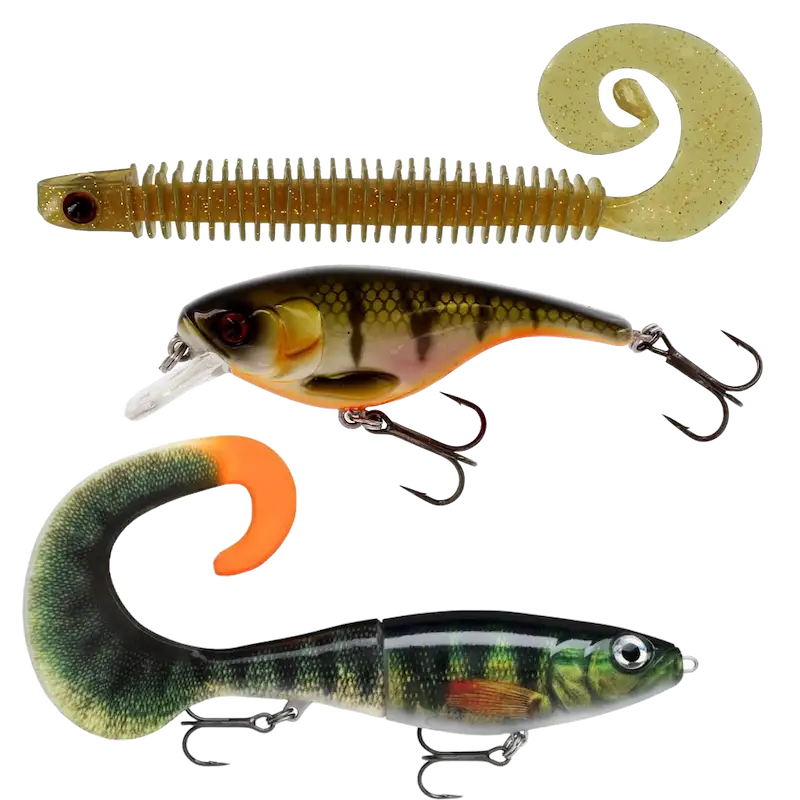
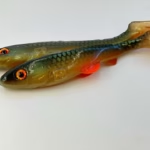
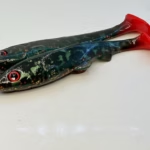
Here’s the Guppie’s design: compact body + belly roll + exposed hooks + tail-driven profile.
That compact shape matters because it helps with hook coverage and clean contact. You want the lure to feel “grab-able” when a fish swipes. That compact nature helps maximise hook coverage, rather than letting fish nip at a long tail with nothing to stick.
Then there’s the body shape. The Guppie comes with a convex body shaping from top to belly, which helps expose hook points and boosts hook sets. That same profiling is also linked to extra flash and belly roll, which is exactly what you want from a glide bait on the swing and on the stall.
So, you’re not buying it for “detail” alone. You’re buying it because the shape helps it show itself when it turns, then hang there looking like a mistake.
This lure is built to get seen. Then get eaten.
Who it’s for (and who should skip it)
If you hate fishing slowly, don’t buy a Guppie. It’s a control lure. It rewards patience and timing. That means you need to enjoy working a bait with small rod taps, planned pauses, and steady depth management, rather than constant winding.
The best fit is you if you like being hands-on. You’re the kind of angler who notices follows, changes cadence, and gives a lure a second chance with a different rhythm. You like making something happen on the pause. You also want a bait that can look subtle or aggressive based on how you move it, because the Guppie is designed around that “tap and glide” idea.
On the other hand, it’s not ideal if you want simple. If you want a lure that does the work by itself, a straight-running hardbait will feel easier. With the Guppie, your hands are part of the design. That’s not a flaw. That’s the deal you’re making when you choose a glide bait.
So if you’re ready to slow down and fish with intent, the Guppie makes sense. If you want autopilot fishing, you’ll probably need other options.
Match the Guppie to Your Water and Your Gear
Each size of the Guppie family behaves differently once it hits the water. That’s why “Which one should you buy?” is really “Where do you fish, and what do you want the lure to do?” The three versions you’ll see most often are the full-size Guppie, the Guppie Jr, and the Guppie Downsize.
Start with the Strike Pro Guppie 13.5 cm / 120 g. This is the bigger profile, and it’s the one you reach for when you want a “proper meal” look without going to a giant swimbait. At 13.5 cm and 120 g, it’s a sinking bait that typically works the 1.5–3 m band. It comes rigged with 2 x #2/0 trebles, which matches the idea that this lure is meant to hold bigger fish once they commit. This is the Guppie you pick when you’ve got room to work it, you want longer casts, and you’re happy throwing a heavy lure for a session.
Next is the Guppie Jr 11 cm / 70 g. If the full size feels like a brick on your setup, the Jr is the easier entry point. At 11 cm and 70 g, it’s still a sinking lure with a common running depth of 1.5–3 m. For Irish anglers, it’s handy that you can also get a stated sink-rate figure for the Jr (more on that below). The “what it’s for” angle is simple: the Jr is easier to fish on more modest gear, and it can be a better bet when pike are following bigger baits but refusing to close the deal.
Then you’ve got the Guppie Downsize 9 cm / 35 g. This is the everyday option for smaller venues, shallower edges, and pressured fish. At 9 cm and roughly 35 g, it runs shallower in the 0.5–1.5 m band and sinks. If you fish canals, narrow rivers, or lough margins where you’re constantly close to weed and snags, the Downsize is the one that fits in well.
Buoyancy and depth factor
These are sinking lures, and the depth bands make it easy to pick the right model. The full-size Guppie typically works the 1.5–3 m zone. The Guppie Jr also commonly sits in the 1.5–3 m range. Meanwhile, the Downsize is the shallow worker, usually running 0.5–1.5 m.
Those depth numbers are closer to “this is the typical band, if you fish it normally.” Your actual running depth changes based on what you do with the lure. If you retrieve faster, it will generally track deeper and stay more engaged. If you pause longer, a sinking lure will drop more between pulls. If your line is thicker, it can create more drag and slightly alter how the lure tracks. If your rod tip is high, you often keep it shallower; if your rod tip is low and you pull more downward, you often get more depth.
Use the printed depth as a guide for choosing the model, then use your retrieve to fine-tune where it swims on the day.
For example, if you’re working the full-size Guppie along a reed edge and you want it to stay above weed tops, you can shorten your pulls and keep your rod tip up. If you want it to dig closer to the bottom along a drop-off, you can lower the rod tip and lengthen the pull, then pause long enough for it to sink into the lane before the next glide.
Hooks, hardware, and lead-free build
Hook and hardware details matter because they affect hooking, safety, and how the lure moves. The full-size 13.5 cm / 120 g Guppie runs 2 x #2/0 trebles. The Guppie Jr typically comes with #1 trebles, with some setups using #1/0. The key takeaway is that the Jr’s hooks are usually smaller than the full-size model, which matches how it’s meant to be fished: slightly more finesse, slightly less brute force.
The Guppie models are lead-free. If you care about materials, that’s a useful detail, because it tells you the lure is built without lead weighting as part of its construction. That won’t change how you fish it day-to-day, but it can influence what you choose to put in your kit (it’s also where EU regulations are heading anyway) .
Finally, sink rate is one of those “small” stats that helps you fish more deliberately. The Guppie Jr drops at roughly 15 cm per second, and that pairs neatly with its 1.5–3 m working band. That gives you a rough countdown tool. If you want the Jr to drop about 60 cm before the first pull, you’re looking at roughly four seconds of sink time. It won’t be perfect every time, but it’s far better than fishing blind.
The Guppie Tail System
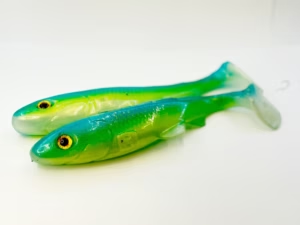
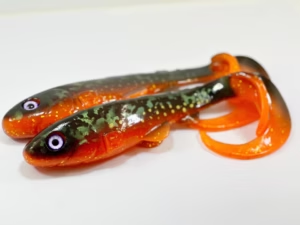
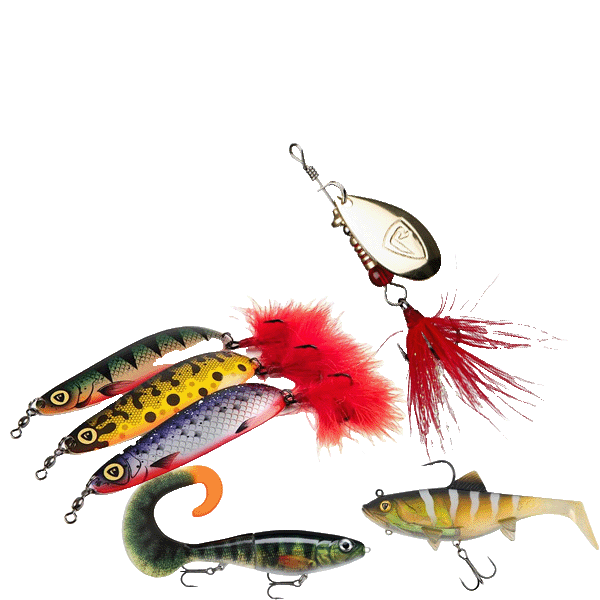
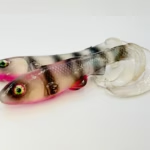
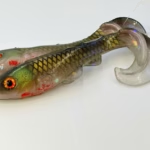
When you buy a Strike Pro Guppie, you’re not just buying a hard body. You’re buying a lure that’s meant to be adjusted. That’s why the Guppie pack comes with 1 lure body, 1 paddle tail, and 1 curl tail.
That “two tails in the pack” detail changes how you should fish it. You can start with one tail, watch how fish react, then switch without changing lures. It keeps your session moving, especially when you’re getting followed but no hits. If you ignore the tails, you’re wasting what you paid for.
Spring screw tail system 101
The Guppie’s tail setup is built around a spring screw tail system. It’s a screw-style mount at the back of the lure that lets you swap tails quickly, without re-rigging the whole bait.
This matters because tails do more than “look different”. They change how the lure pushes water, how much it rolls, and how stable it feels during pauses. The Guppie RT (rubber tail) concept is about changing the lure’s dynamics by switching between four different tail types. That’s the whole point of the system. It turns one lure into a small toolkit of actions.
You’ll also see the same “swap between tail types” talk with spare tails, which is handy because it shows the system is core to the lure. A Guppie with the wrong tail can feel average. A Guppie with the right tail can feel like you’ve finally cracked the code.
Four tail styles and what each is for
Most anglers treat tail choice like a colour choice. That’s a mistake. The Guppie tail options are about action first, and profile second. There are four options: a standard curly tail, two paddle-tail variations, and a subtle fish tail.
- Standard curly tail: wide roll and “struggle” signals
The curly tail is your wide-roll option. It makes the bait look unstable on the pull and the pause. That’s what you want when you’re fishing slower and you need the lure to look like it’s struggling. It’s also a strong pick when fish are following at a distance, because the bigger roll gives them more to lock onto.
For example, if you’ve had two follows in the same margin and neither fish struck, swap to the curly tail and slow your pulls. The extra roll can turn a “look” into a hit, because the lure starts to look less in control.
- Paddle tails: stronger vibration and more presence
The paddle tails are your vibration tools. They add a stronger thump and more water push. That matters when the water has colour, or when surface chop is killing visibility.
If you’re fishing on a windy day and your lure feels like it’s disappearing, the paddle tail gives you a clearer “thump” and a stronger presence. You still fish it as a glide bait, but it carries further in messy conditions. This is the tail that helps you get noticed.
- Fish tail: subtle profile when fish are picky
The fish tail is the subtle option. It calms the lure down and keeps the profile clean.
Reach for it when pike ghost behind the bait, then turn away at the last moment.
A simple way to use it: if fish are tracking close but not committing, switch to the fish tail and shorten your pulls. That combination can make the bait look less like a stunt and more like something just drifting.
- Spare tails and what’s actually in those packs
Tails get chewed. That’s not a maybe. It’s normal. The spare tail packs are also a great way to experiment, because you can rotate actions without buying another full lure. A common spare-tail pack gives you 3 curly tails and 1 paddle tail.
So how do you choose on the day? Start with the tail that matches your problem. If you need more roll and “wobble”, go curly. If you need more vibration, go paddle. If fish are acting cautious, go fish tail. Then commit to the change for at least a few casts, because tail swaps work best when you also adjust your cadence to match the new action.
Gear and Rigging for Irish Waters
Rod and reel setup by size
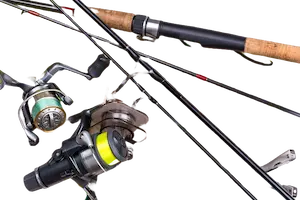
The Guppie is not a “one-rod fits all” lure family. The simple reason is weight. The Downsize sits in the ~35 g class, the Jr sits around 70 g, and the full-size Guppie is 120 g. That spread is big enough that the wrong setup will make the lure feel awkward, and awkward fishing leads to mistakes.
If you’re throwing the Downsize (~35 g), you want a medium-heavy spinning or baitcasting setup that feels comfortable around that weight range. Comfort matters more than “how far can I launch it.” A glide bait works best when you can control short pulls and pauses without feeling like the rod is doing yoga in your hands. So if you’re fishing canals or smaller rivers, a medium-heavy setup that you can fish all day will keep your cadence clean.
For the Guppie Jr (11 cm / 70 g), step up to a heavy setup that’s genuinely happy with this weight. The Jr is the size many anglers start with, because it’s still a serious lure but doesn’t feel like a brick. However, “start with the Jr” only works if your rod can load properly on the cast and recover cleanly on the pull. If your rod struggles, you’ll pull too hard to compensate, and the lure will start looking forced instead of fluid.
For the full-size Guppie (13.5 cm / 120 g), you’re firmly in swimbait/jerkbait-grade territory. You want a rod that can cast that weight repeatedly, and a reel that doesn’t feel stressed. That doesn’t mean you need to throw it into orbit. It means you need to work on it with confidence. When your gear matches the lure, your wrist stays relaxed and your taps stay consistent. That’s what makes a glide bait look alive.
One simple rule to keep in mind is this: if you feel tired after 20 casts, your setup is wrong. You’ll start rushing, and the lure will stop doing what it was designed to do.
Line, leader, and the non-negotiables for pike
Pike have sharp teeth, and they will cut you off. So your main line choice is important, but your leader choice is the real decider. You need something bite-proof between your main line and the lure, especially with an expensive hardbait and treble hooks in play.
No trace equals donated lure. That’s simply how pike fishing works.
For leaders, you’ll see two common “safe” options mentioned again and again: wire and heavy fluorocarbon. You can use fluorocarbon or metal wire leaders, and even a 20–30 cm leader length to prevent bite-offs.
An 18-inch (45 cm) wire trace is a sensible length, partly because a short trace can wrap around a pike’s head during the fight and get cut off. You don’t have to copy that exact length for lure fishing, but the principle remains: short leaders can create problems at the worst time.
Your connection hardware matters too. Clips, snaps, and swivels should do two things well. First, they should be strong enough to handle a heavy lure and sudden hits. Second, they should let the lure move freely, so the Guppie can glide and pivot instead of feeling “stiff.” You’ll often hear anglers obsess over tiny details here, but the truth is simpler: pick reliable hardware, check it often, and don’t fish bent or damaged clips.
Also, set your drag sensibly. A glide bait bite can be savage. You want enough pressure to set trebles, while still giving line on a violent lunge near the net. That balance keeps hooks in and reduces damage to the fish.
Safe handling tools you should carry
If you’re targeting pike, carrying the right unhooking kit is part of being responsible. It also keeps you safer, because pike teeth and treble hooks are a nasty mix when you’re unprepared.
Inland Fisheries Ireland’s pike handling guidance lists a minimum setup for landing and unhooking that includes a good knotless mesh landing net, an unhooking mat, long-nosed forceps/pliers, and wire cutters. That kit is the baseline that helps you unhook quickly and return fish in good condition.
Here’s why each item saves your session: A knotless mesh net is kinder on fins and slime, and it gives you control without tangling hooks everywhere. An unhooking mat stops the fish thrashing on stones, concrete, or dry grass, which reduces harm and makes your job easier. Long forceps or long-nosed pliers let you reach treble hooks without putting your fingers where they don’t belong. Wire cutters are your emergency exit. If a hook is awkward or buried, cutting a treble can be faster and safer than wrestling it out.
This is echoed in Irish catch-and-release guidance too, including using large knotless mesh nets, laying the fish flat on a mat, and removing hooks with long handled artery forceps or long-nosed pliers. So have the kit ready before you cast, because you won’t have time to “sort it out later” when a fish is on the mat.
If you want a simple habit that helps, set your unhooking area up first. Then when you hook a pike on a Guppie, you can land it, unhook it, and release it smoothly, without chaos or panic.
How to Fish the Guppie Properly
The core retrieve: tap, glide, pause
The Guppie is built for light inputs. It glides on the lightest tap and then flashes and wobbles on the pause, so your job is to keep your movements small and deliberate. You’re aiming for a clean “slide out… stop… slide out again” pattern.
Start with this simple cadence:
- Cast to your target line (reed edge, drop-off, canal wall).
- Let it settle for a moment.
- Give a short tap with the rod.
- Immediately pause and watch.
- Repeat, but vary pause length slightly.
On the pause, you’re watching for three things. First, a line “tick” or a tiny sideways draw. Second, a boil behind the lure. Third, a shadow that appears and then fades. All three mean the same thing: a fish has clocked it. Now you respond by changing only one detail, not everything at once. Either shorten the next pull, lengthen the pause, or add a second tap to make the bait kick.
If you do that calmly, the Guppie’s glide-and-pause behaviour does the heavy lifting.
Depth control
Depth control with a sinking glide bait is mostly about routine. Aim for consistency, not perfection.
A useful starting point is to use published sinking speeds as a rough guide, then adjust based on what you feel.
For example, for the 13.5 cm / 120 g Guppie, there’s a sinking density of about 30 cm per second. So, if you want the lure to drop roughly 60 cm before you start, you’re thinking in the ballpark of two seconds. If you want it deeper, you wait longer. It won’t be exact every cast, because line thickness, current, and your lure angle all interfere. Still, it gives you a repeatable baseline.
Rod tip height is your other control lever. Keep your rod tip higher and your pulls more sideways, and you’ll usually keep the bait riding higher in the water. Drop the rod tip and pull slightly down, and you’ll generally get more depth per pull.
If you’re fishing over weed tops, keep the first pull short and avoid ripping. If you feel the bait tick weed, don’t panic. Pause. Then give one gentle tap to glide it free, rather than yanking it like a jig.
Trigger moves that turn followers into hitters
A following pike is not a fail. It means the lure looks interesting, but something about your rhythm is letting the fish stay curious instead of committed.
The first trigger move is a direction-change tap. You do a normal glide, pause, then give a quick micro-tap that makes the bait kick the opposite way. That sudden change is exactly the kind of thing the Guppie is designed to do. It responds easily to tiny rod inputs.
The second trigger is pause length. If your pauses are always one second, you teach followers to time you. So change it. Go one second, then three seconds, then one again. Many predators hit right when you restart after a longer pause, because it looks like prey trying to recover.
The third trigger is the one-second speed burst. This is not a long burn. It’s one sharp, one-second pull, then a dead stop. The burst looks like panic. The stop looks like weakness. Together, they force a decision.
Finally, use a bank-side “figure of eight” adaptation if your spot allows it. When the lure reaches the bank, don’t lift it straight out. Instead, sweep the rod tip in a wide curve in front of you, keeping the lure moving. This is a last-second trap for fish that follow to the edge and hesitate.
Hooking and landing: do it fast, do it clean
With a glide bait, you don’t want a wild strike. You want a controlled hook set, because trebles are already doing a lot of work. When you feel weight, sweep into the fish and keep pressure steady. If you hit too early on a tap, you can pull the lure away from a fish that hasn’t fully turned on it yet. So, when in doubt, wait for weight rather than reacting to a splash.
From there, your landing plan should already be set up. A big pike at your feet is not the time to start digging through your bag. Have a proper, fish-safe routine: land the fish with an appropriate net, lay it flat on a protective mat, and remove hooks with a suitable tool. You can lay the fish flat and using long-handled forceps or pliers.
Ireland Rules and Seasons You Need to Know for the Guppie
Ireland is brilliant for pike anglers because you’re not boxed into a short “season window”.
However, “all-year fishing” does not mean “no rules”. For instance, you cannot keep more than 1 pike under 50 cm (fork length) or more than 0.75 kg of pike flesh, and you must return pike over 50 cm to the water. That affects how you plan your day and how you handle fish.
Rules can change by water and by local management, so you should still check what applies before you head out. The official hub is here: Fishing in Ireland – Regulations. It explains when you may need a local permit, even though a licence is not required for trout, pike, and coarse fishing in general.
Water types: loughs, rivers, canals
The Guppie is a sinking glide bait, so it’s great when you can work a chosen depth band and keep it there. That fits a lot of Irish fishing, but the “how” changes depending on the water you’re on.
On loughs, your best Guppie water is often the bit everyone ignores. Fish the edges of wind lanes, the transition lines where clean water meets coloured water, and the zones where bait gets pinned. Use the Guppie when you want a sideways slide that looks like a lone fish drifting off course. Keep your pulls short, then pause long enough for the lure to hover and drop a touch. That stop-start look is what makes pike commit.
On rivers, you want the quieter stuff. We’re talking slack glides, slower inside bends, and areas behind cover where a predator can sit without burning energy. A glide bait lets you send a meal across that holding lane without ripping it past the fish. Cast slightly upstream or across, control your line, and work the lure so it swings and stalls naturally.
Most people fish it too fast in canals. You need discipline. Canals are narrow, straight, and often clear enough for pike to inspect the lure up close. So if you burn the Guppie back, you turn it into a confident swimmer and you lose the whole “easy meal” effect. Instead, fish it tight to the edge, tap it into the drop-off, then pause and watch your line. If you’re getting follows, slow down even more and make your pauses longer.
Conditions and seasonal behaviour
Your Guppie approach should shift with conditions, because pike behaviour shifts too. In cold water, fish are often less willing to chase, so longer pauses make sense. This is when subtle, controlled movement tends to get you more proper takes than big, frantic pulls. If you’re using the tail system, this is also the time to lean towards less aggressive action and let the lure “hang” in the zone for longer.
As the water warms, you can usually fish the Guppie with more speed tolerance. You can shorten pauses, add a second tap, and cover more edge in the same session. This is also when stronger vibration options often earn their place, because fish are more active and the lure can carry a clearer presence.
After rain, when water colours up, the Guppie can still work well because it offers a bold silhouette and a clear side-to-side track. In coloured water, your job is to make the lure easy to locate, then easy to eat. So you keep the cadence simple, pauses obvious, and direction changes clean.