


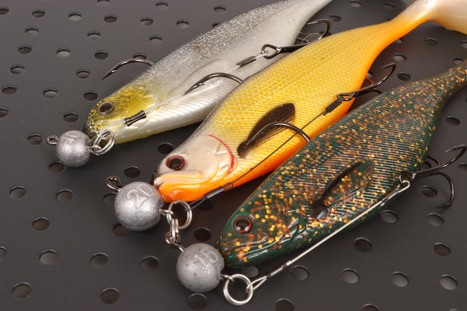
Picking the Right Westin Fishing Lures for Irish Waters
Westin isn’t “just another lure brand”. It’s the sort of tackle that either wins you over fast, or annoys you because it forces you to be deliberate. You can’t just chuck it out and hope. Instead, Westin lures are built around bold, lifelike movement that’s meant to trigger predators when they’re undecided, sulking, or simply following your bait out of curiosity.
So in this guide, you’re going learn the main Westin lure ranges, what each one is designed to do, and how to fish them in different conditions. That means loughs, canals, rivers, and coastal water, because your lure choice should change depending on where you’re standing and what’s in front of you.
Making Of The “Westin Roll”
The fishing lures started with Ingvar Westin. The famous Jätte began as a child’s plaything back in 1952. Then, the legend grew when stories spread of a giant pike caught on it in 1977 in the Norrtälje archipelago, with the fish clocking in over 20kg.
That history matters because it explains the obsession with “roll”. The Jätte’s reputation was built on a big, confident swimming action. It wasn’t a nervous little wiggle. It was a proper body roll that looked like prey trying to keep it together, but failing.
So what does that mean for you on the bank? A rolling lure is a signal. It screams “edible” and “vulnerable” at the same time. In clear water, that side-to-side flash can pull predators from a distance. Then, in coloured water, the same roll helps a fish track it by vibration and movement, even when visibility is rubbish.
Westin’s design DNA
Westin’s lures are built around a simple promise: look real, move right, and survive a beating. It’s all about lifelike finishing and consistent swim behaviour.
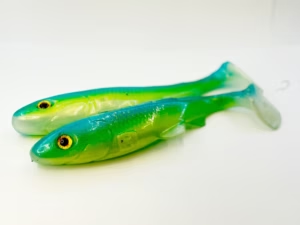
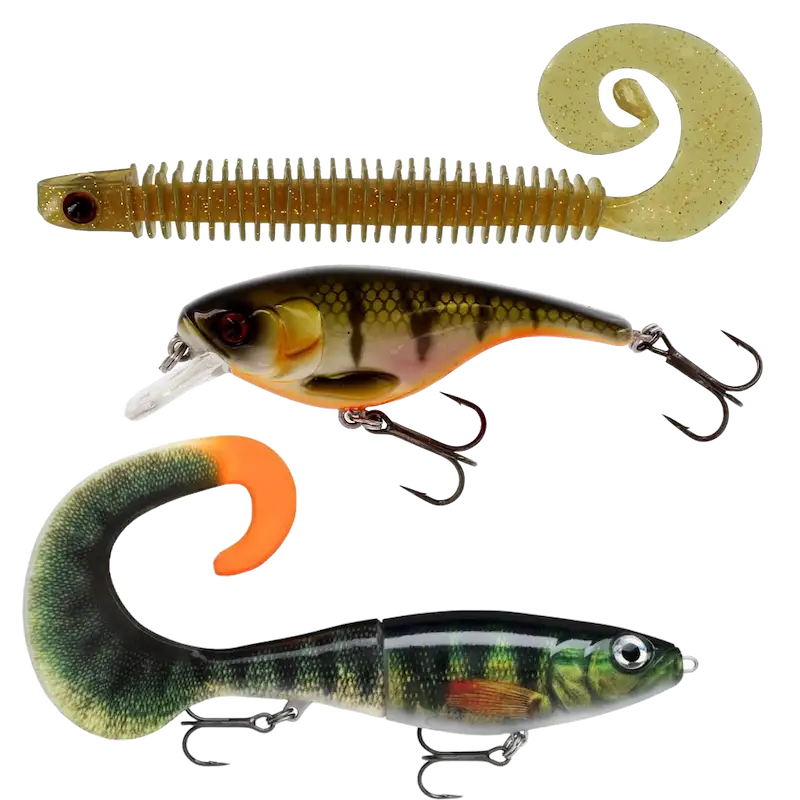
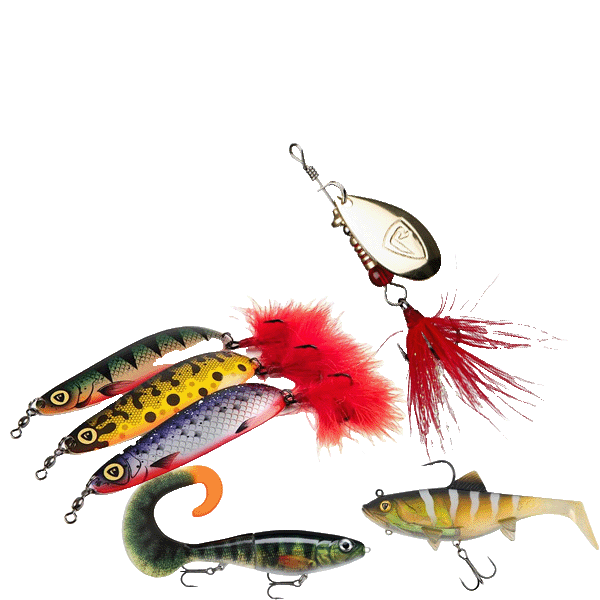
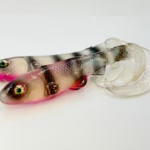
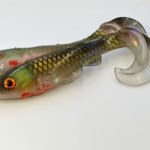
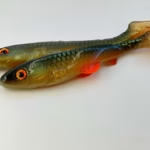
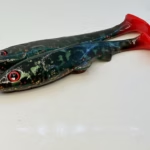
Take the Westin ShadTeez as an example. It comes with features like realistic eyes, hand-painted detailed colours, and a high body design with great belly flash. They also call out optimised flexibility and an “easy action” paddle tail. The lure is meant to look alive and still swim properly at slow speeds.
Now look at a hard lure like the Westin Swim Glidebait. It’s made from ABS plastic, uses ultra-sharp carbon steel hooks, and has a full wire-through-body construction. It comes with a long casting design and hand-painted detailed colours. So a realistic finish, predictable action, and hardware that won’t fold after a few fish.
Cheap hardware ruins good lures.
You can have the prettiest paint job on earth. Still, if the hooks bend, the split rings fail, or the body cracks, you’re just feeding fish expensive souvenirs.
What anglers obsess over is consistency. When you pay for a lure, you want it to swim the same way every cast. You also want it to handle big predator hits without turning into scrap. Westin leans into that by building lures that look good in your hand, then stay functional when teeth get involved.
Materials and compliance trends
You’ll notice “lead free” popping up in conversations about the Westin fishing lures. That is not just a “nice to have” anymore. Europe is moving toward tighter rules on lead in fishing tackle.
The European Chemicals Agency (ECHA) has proposed to restrict lead in fishing weights, including a ban on the sale and use of lead sinkers and lures, with transition periods based on weight. This includes 3 years for ≤50g, 5 years for >50g and ≤1kg. The proposal includes a ban on placing on the market and using fishing sinkers, lures, and fishing wires containing 1% or more lead.
The European Union (EU) also has a draft regulation consultation tied to REACH, with amendments connected to lead and its compounds under the regulation.
So how do you future-proof what you buy? Start simple. If a lure is clearly marked lead free, that’s one less worry if rules tighten. Then, focus on durable construction, because replacing broken tackle gets old fast. Finally, keep an eye on weight-based phase-outs, because the stuff you rely on most might be exactly what gets targeted first.
Tackle shops and brands in Ireland are adapting to these shifts. The smart move is to buy lures you can keep fishing without suddenly needing to rebuild your whole setup.
Westin Lure Families Explained (What Each Is For)
Westin doesn’t do “one lure that does it all.” Instead, it builds families. Each family has a job.
Let’s break Westin down by lure type.
Soft lures: paddletails, V-tails, and when they outfish everything
Soft plastics are your search and control tool. You can cover water quickly. Then you can slow right down. You can fish high. Then you can get deep. You can also change the “feel” of your lure by changing jig heads, hook styles, and speed.
That control matters because predators often follow first. They don’t always smash a bait straight away. Soft plastics let you show the same profile repeatedly, at different depths, without changing the whole approach. That keeps you in the zone longer.
ShadTeez: the rolling paddletail for slow, steady results
This is the Westin ShadTeez which we earlier mentioned (built around a deep body and an easy-action paddle tail). Its design creates a rolling, belly-flashing swim, even at low speed. That “low speed” bit is a big deal. It means you can crawl it in cold water or pressured spots and still get movement that looks alive.
These are the sizes and weights, including pack counts. So you can plan properly:
- 7cm, 4g (4 pieces)
- 9cm, 7g (3 pieces)
- 12cm, 15g (2 pieces)
- 16cm, 39g (1 piece)
- 19cm, 56g (1 piece)
Now, here’s how those sizes play out when you’re actually fishing.
If you’re chasing perch or you’re on smaller water, the 7cm (4g) and 9cm (7g) sizes are easy wins. They’re small enough to look normal in clear water. They also match the kind of prey perch hammer every day. You can fish them on light jig heads and keep contact with the bottom without feeling like you’re dragging a brick.
If you’re in big pike water, or you want to tempt a proper predator, the 16cm (39g) and 19cm (56g) sizes earn their keep. They push more water. They also look like a meal worth the effort. That matters on days when pike are lazy, but still curious.
The 12cm (15g) size is the bridge. It’s big enough to draw in pike. It’s still small enough to get hits from perch and mixed predators. It’s also a great “search” size because you can cast it all day without feeling wrecked.
The lure comes with key design features such as optimised flexibility, realistic eyes, a high body design with great belly flash, and hand painted detailed colours. Those details help with two things: visibility and target focus. If a fish is tracking behind, that belly flash can seal the deal.
BullTeez R ’N R: the rigged paddletail for big predators
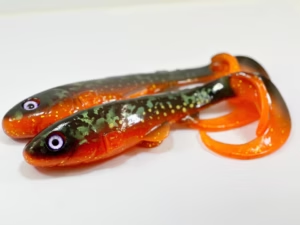
If you want speed and simplicity, the BullTeez Shadtail R ’N R is built for that. “R ’N R” means it’s made to be fished without you spending ages rigging and second-guessing.
It’s the ultimate choice for big predators like pike and zander, with a wriggling, belly-flashing action even at low speed. That is the same low-speed theme again, but with a more aggressive body shape and presence.
Here are the exact sizes and weights:
- 9.5cm, 7g (also shown as 3 3/4″ and 1/4oz)
- 12.5cm, 10g (also shown as 4 7/8″ and 3/8oz)
- 2 pieces per pack
Now the bit many anglers miss: BullTeez can be fished shallow with rigs, or deep with a regular jig head. It even comes with slots on the belly and back for weedless presentation with an offset hook. That is huge if you fish reeds, weed beds, or snaggy margins. You can put it where predators live, not where it’s safe for your tackle.
If you’re fishing a canal edge or a weedy bay, that weedless option can keep you fishing confidently. You can swim it through cover. You can pause it in pockets. Then you can let the tail work on tiny movements.
TwinTeez V2 V-tail: the subtle option for pressured fish
Sometimes fish want less noise. They want something that looks real and behaves calm. That’s where a V-tail presentation comes in.
The TwinTeez has a slim V-shaped head that cuts water and drops faster to your target depth. It also calls the V-tail “delicate,” made for small shakes or twitches. That’s the point. You’re not trying to bulldoze your way into bites. You’re trying to tempt fish that have seen everything.
Here are the stats:
- Length: 14.5cm
- Weight: 9g
- 5 3/4″, 5/16oz
- Box with 40 pieces
This lure is specially designed for bottom vertical fishing for zander, perch, and pike. Try it on pelagic fish, or on a dropshot rig with a small stinger. It even includes a hook slot in the belly for easier rigging. That makes it a very “technical” soft lure, even if you keep your gear simple.
Hard lures: glidebaits and swim baits for reaction strikes
Hard lures are about one thing: reaction. They flash. They track. They make predators decide quickly. That’s why they’re deadly when fish are following but not committing.
A glidebait “slides” left and right on the retrieve. It looks like a baitfish cruising, then darting. A crankbait is usually more of a constant wobble with a diving lip that helps it dig down. A jerkbait is about sharp twitches and pauses, with the lure kicking and hanging in place.
Westin’s Swim Glidebait sits in that glide/swimbait world. It’s designed to move with a confident swimming action and pull fish into striking range.
Here are its details:
- Material: ABS plastic
- Lead free
- Ultra-sharp carbon steel hooks
- Full wire-through-body construction
- Long casting design
- Multi-species target: Northern pike, perch, bass, and muskie
Now the key thing with hard lures is size and density. Westin gives you a proper range, including suspending, sinking, and low floating options:
- 6.5cm, 9g
- 8cm, 16g (suspending)
- 8cm, 19g (sinking)
- 10cm, 31g (low floating)
- 10cm, 34g (sinking)
- 12cm, 53g (suspending)
- 12cm, 58g (sinking)
- 13.5cm (suspending) and 13.5cm, 86g (sinking)
- 15cm, 107g (suspending)
- 15cm, 115g (sinking)
So, how do you choose sinking vs suspending in Irish conditions?
If you’re fishing shallower margins, especially around weed, a low floating 10cm (31g) option makes sense. It gives you time. It also lets you pause without instantly dropping into salad. You can work it over weed tops and along reed lines with fewer heartbreak moments.
If you’re fishing deeper water or dealing with wind pushing your line around, sinking versions can be easier. A 10cm sinking (34g) or 12cm sinking (58g) helps you keep control when your lure needs to get down and stay down. It also helps when fish are holding deeper and only moving up when something annoys them.
Suspending options are about pauses. They shine when predators are following but hesitant. When you stop, the lure hangs there. That little hang can trigger the hit because the fish thinks the prey has finally messed up.
Hard lures are also brilliant for “spot fishing.” If you know there’s a fish in a pocket, you can work a glidebait through that space repeatedly. You can also change speed and angle without swapping lures every five minutes.
“Ready-to-fish” vs “rig-it-yourself”
Westin’s soft lure world splits into two mindsets. One is speed. The other is control. Neither is “better.” You just need to pick what fits the session.
Ready-to-fish options, like the BullTeez R ’N R, are for quick decisions. You grab it, tie it on, and fish. That is ideal when you’re moving spots, chasing a bite window, or fishing after work with limited time.
Rig-it-yourself bodies, like the ShadTeez and the TwinTeez V2 V-tail, give you choice. You decide your jig head weight. You decide hook style. You decide if you want an extra stinger hook. That’s how you tune the lure to the exact depth, weed level, and fish mood.
Westin even bakes “rigging help” into some designs. BullTeez has belly and back slots for weedless hooks. TwinTeez has a belly hook slot too. Those features are there because snag risk is real, and wasted casts kill your confidence.
Here’s the trade-off: Ready-to-fish gives you speed. You lose some fine control. Rig-it-yourself gives you precision. You spend more time thinking and tweaking.
If you want a quick mini-checklist before you tie on, use this:
- First, decide your target depth for most casts. Then pick lure weight.
- Next, check weed and snags. Then choose open hook or weedless.
- After that, decide the fish you want. Then choose lure size.
- Finally, decide your retrieve style. Then choose tail type.
Do that, and Westin’s lure families stop feeling overwhelming. They start feeling organised. Then you can fish with purpose, instead of carrying ten options and trusting none of them.
Match Westin lures to Irish fishing
If you fish in Ireland, you’re part of a huge, busy scene. And heavy participation often equals pressure. Fish see more lures. They hear more footsteps. They get hooked and released more often. So, your tackle choices can’t be random. If you fish the same loud lure in the same way, you’ll get humbled.
This is where Westin can suit you. Westin’s ranges give you options to adjust profile and action without changing brands every time. You can go from subtle to aggressive. You can go from small to meal-sized. Then you can stay confident because you’re still fishing “Westin style” baits, just tuned to the venue and mood.
Pike in Ireland and your Westin picks for loughs, rivers, and canals
Ireland’s pike fishing is famous for a reason. Yet the “right” Westin lure changes depending on where you’re fishing. The same pike behaves differently in a wind-swept lough than it does in a narrow canal.
Big open loughs: Go search-first with bigger profiles
Open water can feel empty until it suddenly isn’t. So you need lures that help you cover water and pull fish from a distance. This is where larger soft plastics like the 16cm (39g) and 19cm (56g) versions of Westin’s ShadTeez can make sense, because you’re offering a proper meal that moves water and shows plenty of flash.
Hardbaits also help in open water because they cast well and keep a consistent action across long retrieves. The Westin Swim Glidebait is a solid “search” option in this situation, especially in mid sizes where you can work it across drop-offs and wind lanes without it feeling too heavy.
Start by scanning structure. Work points, bays, and the edges of weed beds. Then, when you contact fish, you can slow down and repeat that line. Pike don’t live everywhere, so don’t fish everywhere. Fish the areas that look like they hold bait.
Weedy bays and reed lines: Fish where the pike sits
Weed is where a lot of Irish pike hunting happens. It gives cover, ambush points, and warmth in spring. It also eats lures for breakfast.
So here, your lure choice should reduce snag time. Westin’s soft lure approach can help because you can rig weedless and swim shallower.Soft lure ranges are all about fishing at low speeds with strong action, which suits creeping along the tops of weed rather than punching deep and snagging up. You can start with ShadTeez sizes that you can hold just over the weed line and keep moving, like the 12cm (15g) size.
This is also where you should keep conservation in mind, even if you’re “only lure fishing.” Ireland’s pike protections are strict and they’re there for a reason. The official “Fishing in Ireland” guidance explains the Pike Bye-Law No. 809 (2006), including a bag limit of 1 pike in any one day and a rule that prohibits the killing of any pike greater than 50cm fork length.
If you’re fishing weedy margins, you will hook fish close in. That means landing, unhooking, and releasing fast matters more than ever. If you drag pike through weed for a photo, you’re doing it wrong. Get the fish back quickly and let it stay a predator.
Canals and slow rivers: Scale down and control depth
Canals and slow rivers are tighter, more structured, and often clearer. Fish can inspect your lure for longer. So you usually want more control and a slightly smaller profile, especially if the water is calm.
This is where Westin’s smaller ShadTeez sizes can shine, like the 7cm (4g), 9cm (7g), and 12cm (15g) options. You can fish those along canal edges, near moored boats, and beside slow-flowing reeds without it looking out of place.
Season matters here too. In colder months, a smaller paddletail crawled slowly often gets eaten because it looks manageable. Then, in warmer months, you can speed up your retrieve and use quick pauses to trigger hits near cover. The venue doesn’t change, but fish behaviour does. So your Westin “pick” is really about how you want to present the lure.
Perch and mixed predators and how to scale down properly
Perch fishing is where many anglers sabotage themselves. They downsize in the wrong way. They go too tiny, too light, and lose control. Or they keep the lure size fine but choose a presentation that looks stiff and unnatural.
With Westin, you can scale down without losing confidence because the smaller ShadTeez sizes still keep that paddletail action. The 7cm (4g) and 9cm (7g) sizes are standard options, and the 12cm (15g) size sits nicely when perch are eating bigger prey or when pike are also in the mix.
A simple way to think about it is this. In clear water, perch can be picky, so you want a natural profile and steady control. The 7–9cm sizes help because they don’t look ridiculous. Then, if the water has colour, you can move up to 12cm and fish it a bit slower, so the fish has time to find it.
Colour logic matters too, but keep it basic. In clearer water, natural baitfish tones usually look safer. In coloured water, stronger contrast often helps fish track the lure. You’ll go deeper on colour choices later, but for now, don’t overthink it. Confidence catches more fish than panic-buying “the perfect colour.”
Sea options and bass-friendly thinking with Westin
Westin isn’t only for freshwater. That’s why some of its lures are multi-species. Like the Swim Glidebait that works for Bass, Northern pike, perch, and muskie.
So, if you’re shore fishing, fishing estuaries, or working shallow ground, smaller glidebait sizes can fit the job, especially when you want a steady swimming action that covers water. Soft plastics like ShadTeez in the 7–12cm range can also make sense in saltwater because the profile is believable and the tail does the work on a simple retrieve.
At the same time, sea angling rules can change by season. So for bass, you should always check the current Irish regulations before you go, especially around bag limits and retention periods. Bass is not a free-for-all here, and handling matters as much as hook-ups.
How to Fish Westin Lures Properly (Retrieves, Depth Control, and Triggers)
Straight, twitch, sweep and pause during retrieves
Westin lures look great in your hand. Still, they only become “alive” when you make smart choices with the retrieve. You want the lure to look like prey that is either cruising, struggling, or trying to escape.
Start with a straight retrieve when you need information. It’s your “search mode”. You cast, you wind, and you watch. You’re not trying to be clever yet. Instead, you’re looking for signs: follows, swirls, bumps, or that heavy feeling like the lure suddenly got bigger.
Then, once you’ve had any interest, you change tempo. A twitch is a quick, sharp rod tip pop that makes a lure kick. A sweep is a longer pull that makes a glidebait travel and change angle. A pause is the moment you give a predator time to commit. Those three moves turn a boring pass into a hit, because fish love the idea of prey making a mistake.
Cold water is where most anglers lose patience. So keep it boring on purpose. Slow down and add longer pauses. A suspending lure is handy here, because it can hang in place while you do nothing. Westin’s Swim Glidebait comes in multiple suspending options, including 8cm 16g, 12cm 53g, and 15cm 107g, which gives you choices depending on wind and depth.
Warm water is different. Fish have more energy and they react faster. So speed changes and direction changes can work better than long pauses. You can wind faster for a few turns, then sweep the rod to make the lure dart, then pause for a beat. That stop-start rhythm often triggers the strike because predators hate losing food.
You don’t need to overcomplicate it. You just need to stop doing the same thing for every cast.
Depth control without fancy gear
Depth control sounds technical. It isn’t. You can control depth with three basics: lure weight, rod angle, and a simple countdown.
Weight comes first because weight affects everything. A heavier lure sinks faster and stays stable in wind. A lighter lure rides higher and reacts more to waves and current. Westin’s Swim Glidebait lure family spans from 6.5cm/9g right up to 15cm/115g in sinking form. When you jump from 10cm 34g (sinking) to 12cm 58g (sinking), you’re not just changing size. You’re changing how quickly the lure drops and how much water it pushes.
So use weight like a dial. If you keep missing the depth where fish are sitting, go heavier. If you keep snagging or dragging weed, go lighter or choose a more buoyant option. Westin even gives you a 10cm/31g low floating option for the Swim Glidebait, which is useful when you want a lure to ride higher and recover over cover.
Rod angle is your second dial. A high rod tip keeps your lure higher in the water. A low rod tip helps it dig down. This matters more than people admit, especially in shallow bays or canal edges. You can turn a “too-deep” lure into a usable lure just by raising the rod and slowing your wind.
Then you have the countdown. This is the simplest trick in lure fishing, and it works with soft lures and sinking hardbaits. You cast. Then you count. Then you start the retrieve at the depth you want. The first few casts are your calibration. You count five seconds, fish it, then count eight seconds, fish it, and so on. Once you get a bump or a follow, you repeat that count and you’ve found the zone.
Keep it practical. If you’re fishing a sinking Swim Glidebait like the 8cm 19g (sinking) or 12cm 58g (sinking), a few seconds of countdown can be the difference between “nothing” and “hit”.
Triggering follows into takes
Seeing a follow can be frustrating. Still, it’s not failure. It’s a clue. A follow tells you the fish is interested, but not fully convinced. So your job is to force a decision.
Predators often follow from behind because they want to assess risk. They’re watching speed, direction, and body language. This is where glide direction changes and tail pulses earn their keep. When a lure glides one way, then suddenly changes angle, it looks like prey trying to escape. That triggers the predator’s “now or never” instinct.
With a glidebait, you can create this with a sweep and pause. Sweep the rod to make the lure travel and turn. Then pause for a moment to make it look vulnerable. If the lure is suspending, that pause can be deadly because it hangs there like prey that has run out of gas. For instance, Swim Glidebait’s suspending options across sizes help you build that pause into your routine.
With a soft lure, the trigger is often the tail pulse. A paddletail moving steadily looks safe. A paddletail that suddenly speeds up, then slows, looks panicked. So if you get a follow on a steady retrieve, change something right away. Give it two quicker turns of the handle, then stop for a beat. That tiny burst can flip a follower into a striker.
Here’s a simple rule you can use on the bank: Speed up when the fish is tracking confidently behind the lure, especially in warmer water or when the fish is already committed. Kill it dead when the fish is right behind it but holding back, because that pause can look like the prey has finally made a fatal mistake.
Also, don’t always strike on the first bump. Sometimes predators slap or nudge first. So keep winding until you feel the weight load properly. Then lift and set the hooks. It sounds basic, but it stops you from pulling the lure away from fish that were about to eat.
Seasonal micro-plans for Ireland
Irish seasons change your water temperature, weed growth, and fish mood. So you need a small seasonal plan, not a new shopping habit.
In spring, focus on edges and warming shallows. Predators often sit near areas that warm first, especially in calmer bays. So fish the margins, the reed lines, and any shallow shelf near deeper water. Then keep your retrieve controlled, with pauses that let fish commit.
In summer, weed is the headline. So fish early and late when light is lower, and fish above weed rather than through it. A low floating glidebait can help you avoid constant snagging, like with the 10cm/31g Swim Glidebait.
In autumn, go bigger and cover water. This is the time for feeding spells, wind lanes, and aggressive takes. So a heavier, larger lure can make sense because it casts better in wind and looks like a serious meal. Sinking Westing fishing lures like 13.5cm/86g and 15cm/115g options are built for that heavier style of fishing when you need control and depth.
In winter, fish slow and deliberate. Strike windows can be short, and fish can be reluctant. So you downshift. You add longer pauses. You repeat the same productive line again and again, because roaming around randomly often wastes the best part of the day.
Rules, Licences And Ethics During Fishing
Before you even think about lures, sort your legal basics. It’s boring, yet it’s the difference between a great day and a pointless headache. In the Republic of Ireland, you need a State Licence to fish for salmon and sea trout. On top of that, you usually need a local permit too, depending on the fishery you’re on.
For pike, coarse, and most trout fishing, there is no State Licence. Still, you may need a local permit, especially on managed waters.
Sea angling is usually simpler. Fishing in the sea for most species doesn’t need a licence or permit. That said, salmon and sea trout rules sit in their own category, so don’t assume “sea” means “no rules”. If you’re not sure, check the official regulations before you go.
Northern Ireland is different, and this catches people out. To fish legally in Northern Ireland’s freshwater loughs, lakes, and rivers, you need a rod licence and a permit or day ticket. Sea angling there generally doesn’t need a rod licence, except when fishing for salmon or sea trout.
Pike protection
Under Ireland’s national pike bye-law, you have a daily bag limit of one pike. You can only retain it if it measures under 50cm (fork length). Any pike over 50cm must be released back into the same water.
Separate to the daily bag limit, the regulations also set a possession limit: you may not have more than one pike under 50cm, or more than 0.75kg of pike flesh, in your possession.
Method rules matter too. The only legal method to catch freshwater fish is by rod and line, and you may fish with not more than two rods at any time. On top of that, it is illegal to have or use live fish as bait.
Big pike are protected for a reason. They are the breeders, and they keep waters balanced. So treat them like the asset they are.
If you mishandle pike, you’re part of the problem.That means you unhook fast, keep the fish wet, and get it back quickly. It also means you stop chasing “hero shots” when the fish is clearly stressed.
Bass rules
Bass regulations change, but they are not flexible.
From 1 January to 31 January, there is a 2 fish bag limit, with a minimum size limit of 42cm. Then, from 1 February to 31 March, it is catch-and-release only. After that, from 1 April to 31 December, it returns to a 2 fish bag limit, again with a minimum size limit of 42cm.
Now, “catch-and-release only” is not a casual suggestion. It means you do not retain fish. It also means your handling needs to be tight, because a released bass that dies later is still a dead bass.
So keep it simple. Use a landing net that protects the fish. Use long-nose pliers. Keep the fish out of water for as little time as possible. If your hooks are barbed, crush the barbs for quicker unhooking, especially if you’re new to lure fishing and still fumbling at the critical moment.
Also, measure properly. The 42cm minimum is not something you eyeball. Fisheries enforcement in Ireland takes bass rules seriously, and keep in mind that bass legislation changes annually. Refer to Fishing in Ireland for the current rules, and check out IFI’s enforcement case study page on illegal bass fishing.
Picking the Right Westin Fishing Lures for Irish Waters